
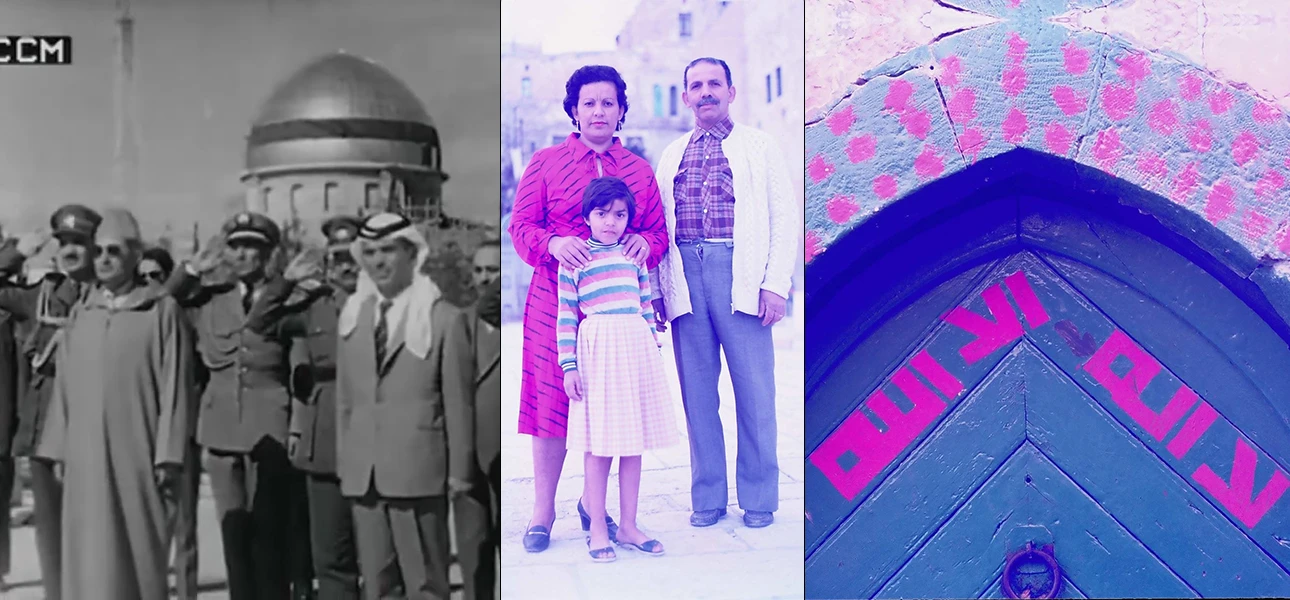
As the conflict between Israel and Hamas enters its ninth month, with thousands of victims on both sides, it is more urgent than ever to explore all possible ways of bringing both sides to a ceasefire and the release of hostages and political prisoners.
One of the questions that arises today, and which has also often arisen in the past, is whether Moroccan Jewish-Muslim memory and history can provide a human, cultural and political basis for appeasement and a rapprochement of political positions between Israelis and Palestinians?
Two additional questions also arise today as the conflict between Israel and Hamas rages on: Will the quality of Jewish-Muslim relations in Morocco, and in the diaspora, withstand this unprecedented resurgence of violence following the massacres and kidnappings of October 7, 2023, and Israel’s military response? Finally, will Morocco-Israeli relations per se withstand this immense Israeli-Palestinian humanitarian, political and diplomatic crisis?
To quickly answer this last question, let’s say that in the worst-case scenario, bilateral security and military cooperation has the best chance of surviving the current crisis.
For the rest – trade, investment, tourism and cultural and academic exchanges – the consequences will be negative, subject to future political and diplomatic progress between Israelis and Palestinians.
In this arduous task involving a complex historical and political issue, that of Israeli-Palestinian peace, the role of Moroccans, Jews and Muslims, and that of Israelis of Moroccan origin, must be more assertive, capitalizing on a positive history of Jewish-Muslim life in Morocco.
Cooperation between Israel and Morocco from the mid-1950s to the present day, and Moroccan diplomatic action which has long promoted the principles of regional cooperation and Israeli-Palestinian peace based on a solution of two states for two peoples, illustrate the practical and political continuity of the common cultural and human capital accumulated over the years. Let’s start with culture, people and religion.
KHMISSA, MIMOUMA, TSEDEKKIM AND FQIHS
For many decades, indeed centuries, Jewish-Muslim life in Morocco has been characterized by numerous common spaces where sharing, collaboration and cooperation are tangible.
The terms “sharing”, ‘collaboration’ and “cooperation”, which can sometimes sound overused to the ears of public opinion divided by conflict and jaded by the persistence of conflict and hatred between Israelis and Arabs, and Jews and Muslims, nevertheless retain their full meaning in the case of Morocco and Israel.
Morocco, for example, was and remains a country where Jews and Muslims share the worship of common saints. Not a few or a dozen, but more than a hundred! This particularity of the Jewish and Muslim cults is not the only one in the kingdom’s rich Jewish-Muslim heritage.
In addition, the Jewish heritage, including cemeteries and synagogues, is being restored, promoted and exhibited. Casablanca and Tangier have Jewish museums run by Muslim women. Marrakech is home to a synagogue-museum, and Fez is soon to boast a fine exhibition space for Moroccan Jewish heritage.
The Moroccan Jewish community is the only Jewish community in the world that celebrates Mimouna, the end of Passover, while at the same time involving its Muslim friends and neighbors.
Over the years, and despite the vicissitudes of Middle Eastern politics, Mimouna has become a Jewish… Judeo-Muslim festival. It’s no coincidence that Moroccan Jews and Muslims share the Khmissa, an endearing symbol of a common beneficent and protective hand.
In the other direction, in Israel, the country’s most venerated saint, tzaddik in Hebrew, is a Moroccan Jew, Baba Salé, born in Rissani, now buried in Netivot, south of Tel Aviv.
In recent decades, Israel’s Chief Sephardic Rabbi has also often been of Moroccan origin.
In terms of civil society, in 2024 Morocco is a country with half a dozen civil society associations – including Amis du Judaïsme Marocain, Salam Likoulam and Maroc Pluriels – working for coexistence and whose members include both Moroccan Muslims and Moroccan Jews, without any of them playing the role of stooge.
In Israel, the West Bank and Jerusalem, there are many associations and groups that share these characteristics, from Standing Together, which brings together Israeli and Palestinian parents, to the village of Neve Shalom and numerous cultural associations in Jerusalem, Bethlehem and Haifa. Examples abound.
“Today, nothing is more right than to assert and claim that Jewish culture is an integral part of Moroccan culture, just as Moroccan culture is an integral part of Israeli culture.”
Today, nothing could be more right than to assert and claim that Jewish culture is an integral part of Moroccan culture, just as Moroccan culture is an integral part of Israeli culture. In Rabat, the inclusion of the Hebrew tributary in the Moroccan constitution of 2011 has consolidated this rich cultural identity.
East of the Mediterranean, you only have to stroll through the streets and markets of Tel Aviv or Jerusalem, talking to shopkeepers and ordinary citizens, to see this.
The same is true of the thousands of Israelis and Jews of Moroccan origin who have been visiting the land of their ancestors since the 1980s, right up to the eve of the current war in Gaza.
In Israel, for more than a generation, the nec plus ultra for going out has been to go to a Moroccan restaurant or to put on a caftan. The chfenj, a simple, tasty Moroccan doughnut with sugar or honey, has become Israel’s national dessert. Examples of this abound in Moroccan art de vivre and gastronomy.
The positive art of living is contagious. For decades, Moroccan Israelis have been celebrating the Mimouna with such joy and fervor that they have finally won over other Israelis, prompting the Israeli government to declare the Moroccan Mimouna a national holiday and dedicate a postage stamp to it!
It’s not without reason that from zero direct flights between Israel and Morocco until 2020, the number of connections quickly increased to one then two daily flights between Tel Aviv, Casablanca and Marrakech plus a few special, then regular flights to Essaouira. Until October 7, 2023.
Why is this important today ?
When it comes to Israeli-Arab, Judeo-Muslim and Israeli-Palestinian relations, Morocco has a different perspective. We saw it in the 40s, then with Moulay El Hassan twice in 1958 in Rome and Beirut when he proposed peace with Israel and Israeli-Palestinian peace; then with Moroccan diplomacy in the 70s, 80s and 90s. Today in Morocco, we can see it in the activity of numerous NGOs and the acceleration of Moroccan-Israeli exchanges between 2021 and 2023.
In Israel too, from the Black Panthers to Shlomo Elbaz yesterday and Daniel Ben Simon today, many Israeli movements and personalities of Moroccan origin have tried to make a different point about relations between Jews and Arabs and between Israelis and Palestinians.
On this point, we can add, without contradicting ourselves, that while Israeli personalities of Moroccan origin were few in number and focused primarily on the goal of internal integration, there is still no consensus within the Moroccan-Israeli Jewish community; many Moroccan-Israelis are “right-wing” Likud or even further to the right. Nevertheless, an Israeli front of Moroccan origin in favor of a two-state solution may emerge.
At the end of the day, admittedly, the result is not always optimal; we’re in the business of competitive, no-holds-barred politics, but the idea is there: in Rabat, Casablanca, Tel Aviv and Jerusalem, Moroccans and Marokai rightly believe they can make a positive contribution to solving some of their communities’ problems.
Why is this important today? These cultural, religious and human exchanges, which have withstood many shocks and wounds, have begun to flourish again since the Oslo Accords of 1993 and 1995.
They form part of the foundation on which a more global Jewish-Muslim rapprochement can operate and flourish. Moroccans, Muslims and Jews, in California and Quebec, for example, know all about this, perpetuating many aspects of Jewish-Muslim life together, even far from Morocco or Israel.
This past, this memory and its maintenance have never been mere passing or ephemeral cultural “effects”. This was concretely expressed in the 1940s, when the Sultan of Morocco obstructed and condemned the French Vichy government’s desire to apply its scurrilous and racist laws in Morocco to the detriment of Jewish Moroccans. Similarly, the freedom of movement of Jewish Moroccans between Morocco and Israel and Israel and Morocco has always been respected.
Crown Prince Moulay El Hassan was also part of this positive past and memory, calling on Israelis and Arabs to discuss, negotiate and make peace as early as 1958, first in Rome and then in Beirut.
The attitude of the future King Hassan II was reflected in his role as an active mediator between Israelis and Egyptians in the 1970s, as a facilitator between Israelis and Palestinians in the 1980s and 1990s, and – with less success, though not without trying – between Israelis and Syrians.
After welcoming Israeli and Egyptian negotiators to Morocco in the 1970s, Hassan II defended the Arab peace plan adopted a few months earlier in Beirut to President Ronald Reagan in September 1982, before receiving Shimon Peres in Ifrane in July 1986.
It is on the strength of its diplomatic activism, its Jewish culture in Morocco and its Moroccan culture in Israel, particularly in East and West Jerusalem, that Morocco can today tell and remind the parties to the conflict in Israel-Palestine of several facts:
- That the conflict is not an inescapable fact of Arab-Israeli or Muslim-Jewish relations. For nearly half a century, not going back to the Israeli-Arab armistice agreements of 1949-50, numerous international agreements have been concluded, peace accords signed and ambassadors exchanged.
- That Morocco and its culture, with its strong Muslim-Arab-Jewish-Amazigh-andalusian-Hassanian identity, can offer itself as a mirror and living laboratory for a solid rapprochement and peace between the Jews and Arabs of Israel-Palestine.
- That Morocco, with its Jewish and Muslim diasporas around the world, and the large Israeli community of Moroccan origin, both religious and secular, can all be vectors for dialogue, rapprochement and peace.
- The action of Moroccan Israelis in this direction will be decisive. They hold an important part of the Israeli and Israeli-Palestinian political equation in their hands. In May 1999, Hassan II did not hesitate to use his connections not only with Moroccans, but also with Israel’s Russians (and/or ex-Soviets), to give electoral support to Ehud Barak’s One Israel party and its allies.
- Given the current state of relations between Israelis and Palestinians, Moroccan culture, politics and diplomacy are uniquely placed to bring ideals, projects and attempts at peace in the Middle East to fruition. In Israel, Palestine and Morocco, identity and peace policy are inseparable. In this sense, no asset should be overlooked.
- To this we can also add the fact that Morocco is present in Ramallah through its embassy, in East Jerusalem through Bayt Mal Al-Quds, and that hundreds of Palestinian families of Moroccan origin live in the Jerusalem region and on the West Bank.
This aspect of Morocco-Palestinian relations is also clearly at the heart of the issue of identity and the politics of peace.
I am convinced that our reflections, ideas and exchanges within the Morocco-Israel Forum at Tel Aviv University’s Dayan Center must lead to concrete action within Moroccan, Israeli and Palestinian societies, in order to achieve peace, security, justice and prosperity for all the peoples of the region.
With regard to these exchanges within the Israel/Morocco Forum, I suggest that we take as a basis for discussion the positions of Ehud Olmert, on the one hand, and Nacer Alkidwa on the other (three-way conference with Thomas Friedman) for a cessation of hostilities and a plan for the creation of a Palestinian state.
Jamal Amiar
(Thanks to Jonathan Ghariani and André Gomel for their readings and comments).
PRACTICAL STEPS TO PUT THE SUBJECT OF MOROCCAN JUDEO-MINISTERIAL HERITAGE AT THE HEART OF DEBATES ON THE PEACE PROCESS.
- INVENTORY OF THE JEWISH-MUSLIM HERITAGE.
- MOROCCAN DIPLOMATIC HISTORY OF THE ARAB-ISRAELI CONFLICT.
- INVENTORY OF MOROCCAN, ISRAELI, PALESTINIAN, FRENCH, CANADIAN AND U.S. NGOS WORKING ON THE SUBJECT.
- CONTACTS WITH POLITICAL FORCES IN ISRAEL, MOROCCO, PALESTINE, FRANCE, CANADA AND THE UNITED STATES.
- CONTACTS WITH THE MEDIA.
- ORGANIZATION OF A CONFERENCE ON THE SUBJECT OF THE MOROCCAN JUDEO-MUSLIM HERITAGE IN THE SERVICE OF PEACE, WITH THE PARTICIPATION OF POLITICIANS AND PRO-RAPPROCHEMENT AND PRO-PEACE ISRAELI-PALESTINIAN NGOS. INVITATION OF OBSERVERS.
- SIDE EVENTS.
- WORKSHOPS